Where is my chin in this moment?
Is it leading the body forward, or floating gently above the chest?

Forward-leaning drafthead pulls ahead, lower back compresses
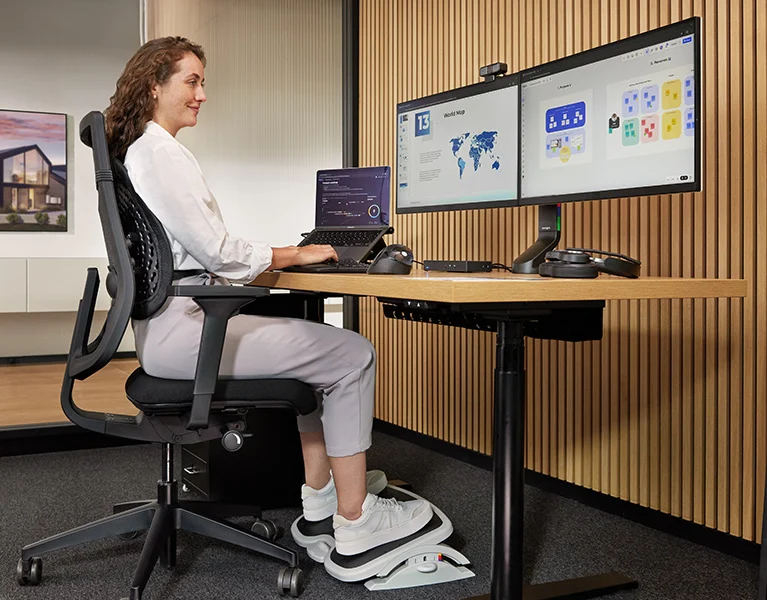
Stacked alignmentear, shoulder and hip on a soft vertical line
In the tense draft the head moves forward of the shoulders. Aligned, it rests above them, freeing the upper back.
A soft curve replaces a deep slouch. Breath has more room and the shoulders settle.
A neutral pelvis spreads weight across the seat and reduces the pull on the lower back.
A long sit shifts weight unevenly. These three areas often hold the most quiet tension. The aligned draft does not erase it; it lets the tension move.

When the screen is too close, shoulders creep forward. Two slow rolls and a backward-glide reset can soften the line again.
When the chair is too low, the pelvis tilts back. Adding a small wedge or a folded blanket can return a kinder angle.
Read each line. Pause for a breath. Notice what your body wants to answer before your mind does.
Is it leading the body forward, or floating gently above the chest?
Are they near the ears, or are they low and quiet on the back?
If they are dangling, a footrest or a thicker book often helps the pelvis settle.
If one alignment felt obviously calmer than the other, the Architect can help you place a related habit tile on a moment of your day.